Saddle-Billed Stork - Male or Female?!
by Stefan Kruger
(White River Mpumalanga South Africa)


Saddle-Billed Stork
Hello to all whom are reading my story.
Look at the photo this bird has both yellow eyes & wattles - the male usually has dark eyes & the yellow wattles & the female yellow eyes with no wattles at all. So I sent the images off to the EWT & they sent it to Dr Alan Kemp for inspection & here is his answer.
Hi Stefan
Have no idea how to interpret Mrs Balls with his/her yellow eyes AND yellow wattles. Have never seen or heard of anything like that in this species, or any other storks, but that may be my ignorance rather than total lack of information. A quick Google search indicates that intersex is regular in all groups of vertebrates (a 1974 book on the subject even), with two main causes, one genetic and the other environmental.
What is interesting, from the Caster Semenya story, is that Limpopo Province has the highest incidence of intersex people in RSA, and one of the highest in the world, and there are doctors studying this and suspecting the DDT is still used to spray round homes for malaria as the cause. Google indicates that several pesticides/chemicals, including DDT, either mimic oestrogens (main female hormones) or despress androgens (main male hormones) and so cause hormonal imbalances during development that can result in various effects, including development of both ovaries and testes. Maybe river/fish quality will indicate if there are any pollutants of these kinds there for concern to the storks - there is probably good river data given the croc problems, and Andrew Deacon may be able to help. Just ideas, but may help in how to proceed, and as always more cases/data will be great.
Am also forwarding you a second email, with images of two subadult SBS taken just above the high level bridge over the Sabie River below Skukuza. This age class was very rare in our early 90s project, so may be of interest. All the adult birds we saw were too far away for useful images.
Ons weet eintlik baie min van hierdie spesie en het op hierdie stadium meer vrae as antwoorde. Ek hou jou op hoogte as jy belang stel.
Tot later
Okay so this bird I found on the S114 between the S118 & S119 Junctions.
I used a canon 400D with a 100 - 400mm F4-5.6 canon lens to take the Images.
Comments for Saddle-Billed Stork - Male or Female?!
|
||
|
||






To make a safari rental booking in South Africa, Botswana or Namibia click here
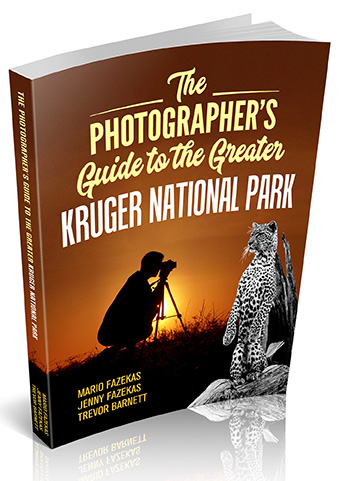
"It's 768 pages of the most amazing information. It consists of, well, everything really. Photography info...area info...hidden roads..special places....what they have seen almost road by road. Where to stay just outside the Park...camp information. It takes quite a lot to impress me but I really feel that this book, which was 7 years in the making, is exceptional." - Janey Coetzee, founder of CAROK (Camps and Roads of Kruger) South Africa
"Having a passion for the region itself and having to know about all dynamics, water holes and ideal roads for a period of 6 years - I wish I had this guide on my first trip already!" - Morkel Erasmus, Secunda, South Africa
"Mario and Jenny take you to places that are not always visited, and their descriptions of the more remote camps will allow you to make an informed decision without wasting time and money" - Bob & Sherry Shepardson, DeBary, Florida, USA
"Your time and money are valuable and the information in this book will help you save both." - Don Stilton, Florida, USA
"I highly recommend the book to anyone visiting Etosha National Park to photograph the animals - or anyone considering an African photography safari in the future." - Anne Darling, Cognac, France
"As a photographer and someone who has visited and taken photographs in the Pilanesberg National Park, I can safely say that with the knowledge gained from this eBook, your experiences and photographs will be much more memorable." - Alastair Stewart, BC, Canada
"This work is so much more than an eBook, because it is also a guide, a tutorial, an inspiration and a must-have for anyone interested in wildlife photography" - Findtripinfo.com, USA
Photo Safaris on a Private Vehicle - just You, the guide & the animals!