Macro Photo Gear
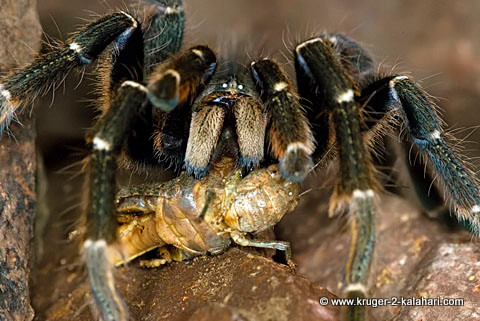
Close-up or Macro Photography is a way to get really unusual photographs and make small creatures look big and impressive but you must have the right macro photo gear.
A macro lens is good to have as it is made to focus very close providing a maximum reproduction ratio of 1:1 or life-size. This means that if you photograph a bee it will appear the same size on the file image. With a ‘normal’ lens the bee would be a tiny speck on the image.
Macro Photo Gear - lenses:
The AF Micro-Nikkor 200mm f4 that allows us to stay further away from the subject (therefore not scaring it away) but still getting a good reproduction ratio of 1:1...
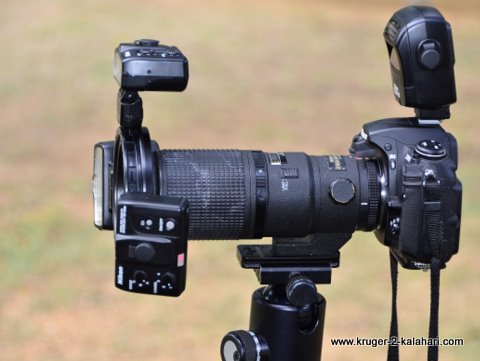
The AF Micro-Nikkor 60mm f2.8. This lens is very sharp and with a PN-11 extension tube provides us with a 2:1 reproduction ratio or twice life-size.
We tried the new Nikon 60mm AFS micro lens but still prefer our old faithful - it may be a bit slower when focussing but we think it is sharper.
Macro Photo Gear - Accessories:
When you magnify a subject like this vibration is also magnified so it is crucial that you use a tripod and / or flash.
The Nikon R1C1 Macro speedlight kit is superb as you don’t need cords and each SB-R200 speedlight can be individually positioned around the subject to provide diffused lighting from different angles.
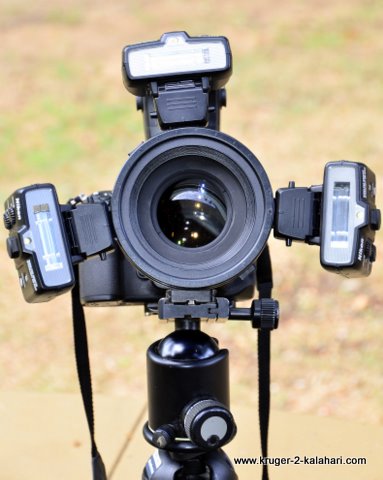
A focusing stage that fits between your camera and the tripod to allow you to move the lens forwards or backwards in order to acquire focus. (For macro photography this is how you get the subject in focus – by moving slightly backwards or forwards).
A Wimberley Plamp that holds flowers still in a breeze.
Close-up attachment lenses that screw onto the front of the lens like a filter. We have three – a Nikon 5T and 6T and a Canon 500D. They can be used on macro lenses to provide more magnification or they can be used on your normal zoom or telephoto lenses to provide closer focusing for macro subjects.
These items are great for people who don’t want to invest in dedicated macro lenses and just want to try out macro photography. Their quality is not as good as a dedicated macro lens but if you don’t have the budget or want to save space and weight when travelling then they are handy.
Auto Extension Rings (PK/PN) – these items fit between the lens and the camera body to provide more magnification but you lose auto focus with them and have to focus manually. They can be used singly or stacked in combination depending on what magnification you require.
We sometimes need more than 2X magnification so we reverse mount either a 20mm or 50mm lens on the 200mm macro to give 10X or 4X magnifications.
The best lighting for wildlife photographs is the two hours after sunrise and the two hours before sun set. This is when most photographers are on game drives so what do you do for the rest of the day? Look for macro subjects in the camps of course!
If it is a sunny day and you find wildflowers you should shade them from the sun and use flash. This is because the sun burns out the colour in flowers. Most insects will be in shade or dappled shade so you won’t need to shade them.
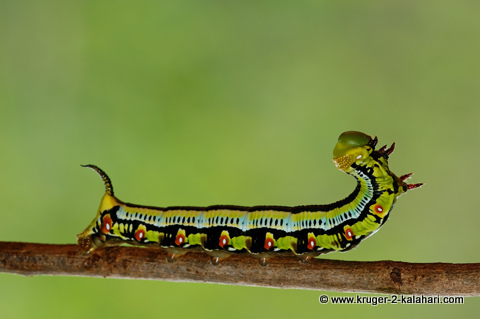
Macro photography is very rewarding for us - here are some macro pictures we have taken in the various parks:
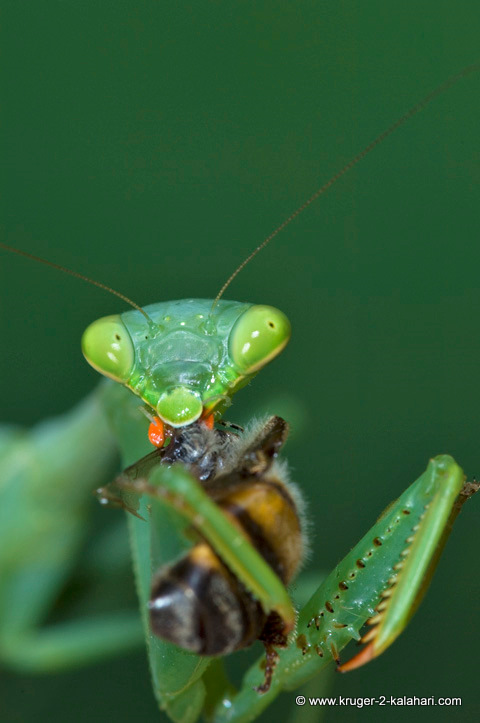
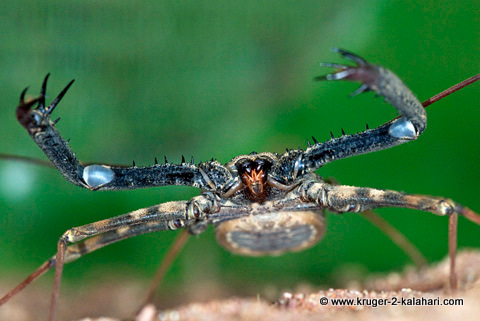
For more information on macro photography visit the blog of Mike Moats or read our interview with Mike.
Return from Macro Photo Gear to Macro Photography page




 Subscribe To This Site



To make a safari rental booking in South Africa, Botswana or Namibia click here
"It's 764 pages of the most amazing information. It consists of, well, everything really. Photography info...area info...hidden roads..special places....what they have seen almost road by road. Where to stay just outside the Park...camp information. It takes quite a lot to impress me but I really feel that this book, which was 7 years in the making, is exceptional." - Janey Coetzee, South Africa
"Your time and money are valuable and the information in this Etosha eBook will help you save both."
-Don Stilton, Florida, USA
"As a photographer and someone who has visited and taken photographs in the Pilanesberg National Park, I can safely say that with the knowledge gained from this eBook, your experiences and photographs will be much more memorable."
-Alastair Stewart, BC, Canada
"This eBook will be extremely useful for a wide spectrum of photography enthusiasts, from beginners to even professional photographers."
- Tobie Oosthuizen, Pretoria, South Africa
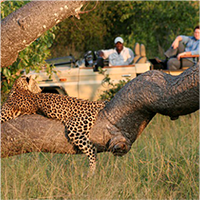
Photo Safaris on a Private Vehicle - just You, the guide & the animals!
New! Comments
Have your say about what you just read! Please leave us a comment in the box below.